From incorporation to closure: the full company lifecycle
A visual board from name search to registration, and checklists for strike-off, dormancy, winding up, restoration and conversion.
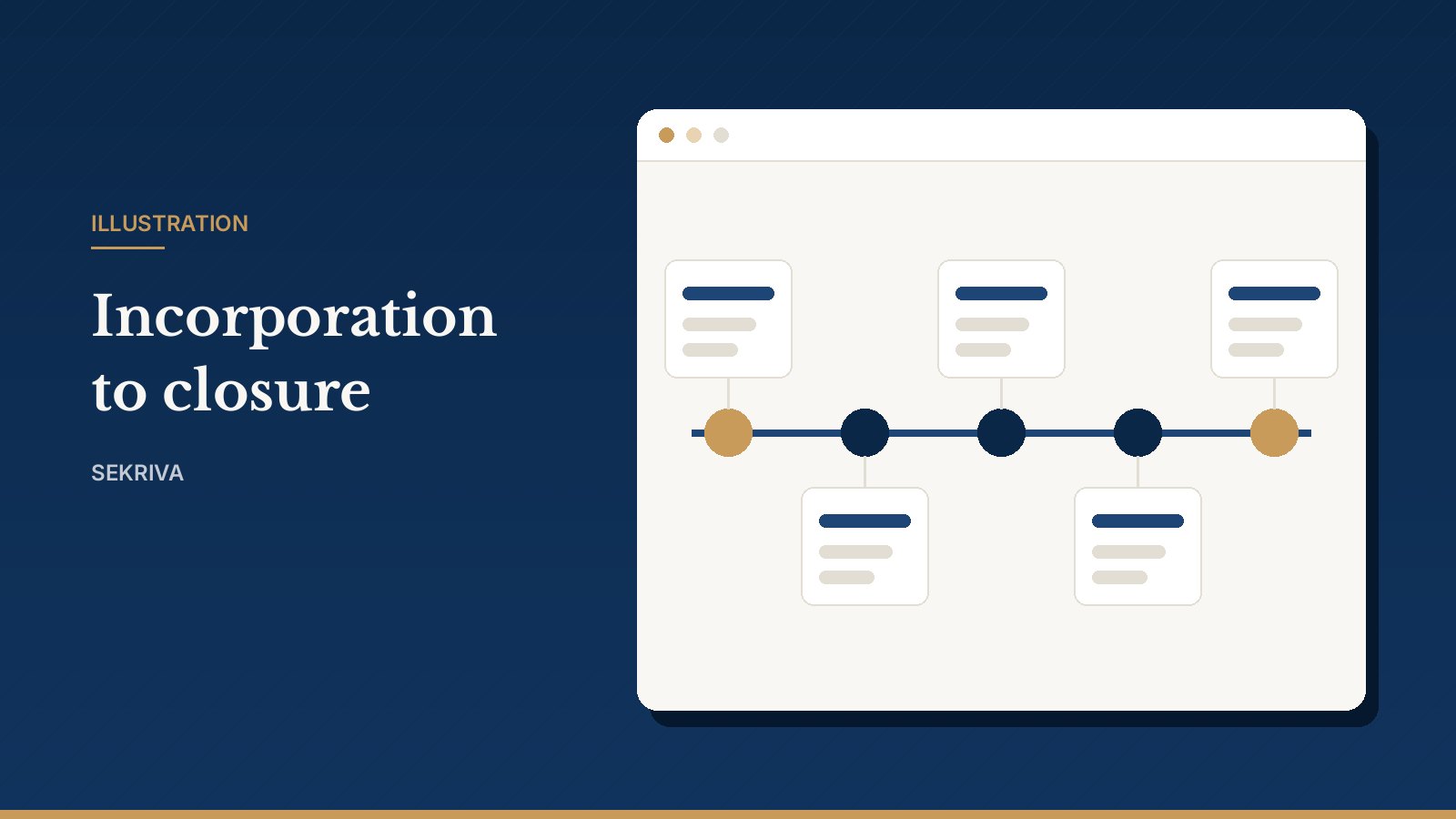
Most of a company’s life is ordinary compliance. Its first and last chapters are different, with many steps and many dates. Sekriva gives both of them a dedicated workspace.
Incorporation
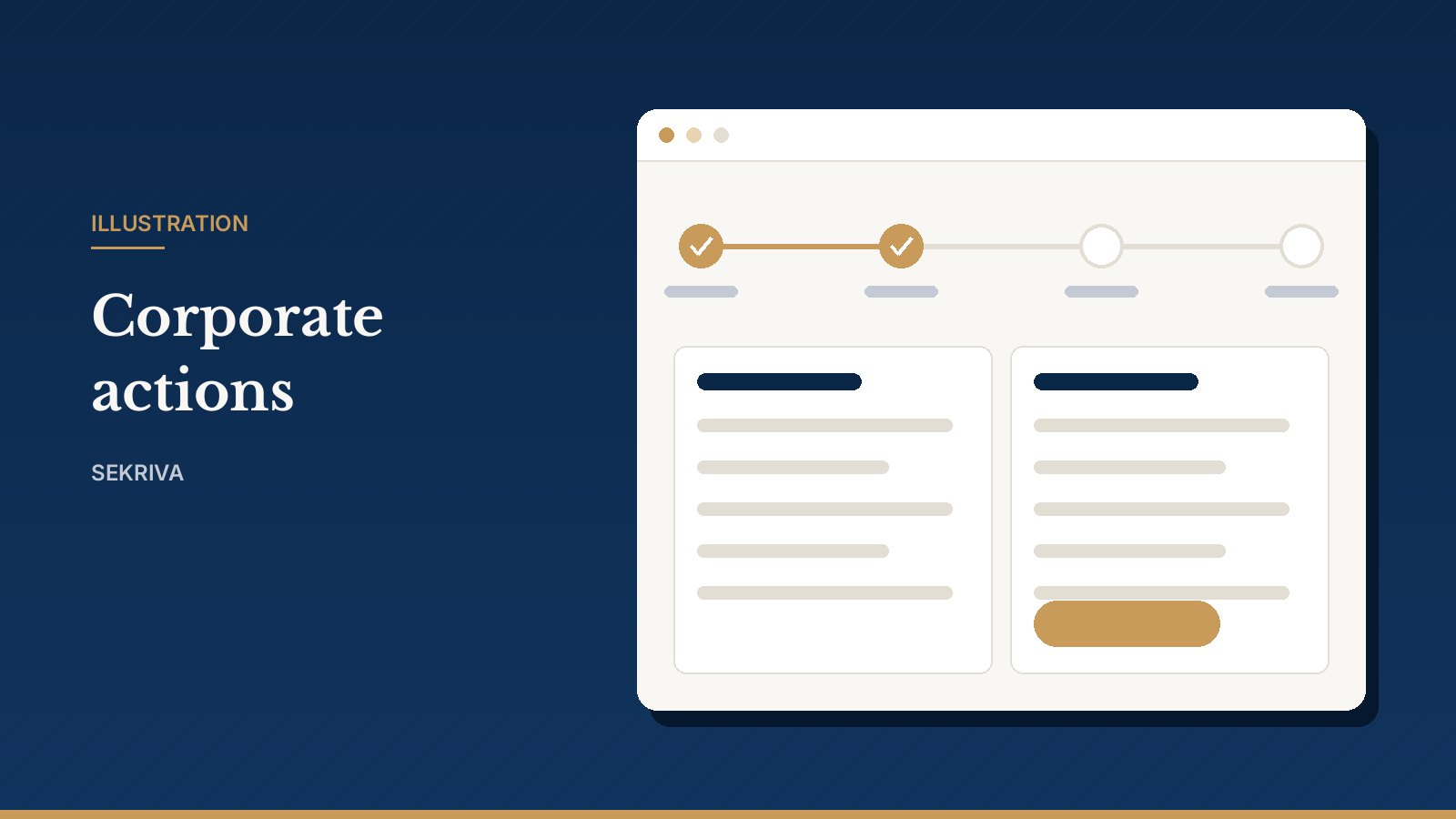
A visual board takes a new company from name search to incorporation. There are six steps: names, details, directors and shareholders, KYC, payment, and submission and registration.
- Click New incorporation. Enter up to three proposed names, the business nature, MSIC codes, directors and subscribers.
- Search the names on the SSM portal and record each result. The first approved name becomes the company name.
- Tick off the steps as you go, or drag the card across the board to update its status.
- Record the SSM submission reference, the date and the evidence (a note or an acknowledgement file).
- When the certificate arrives, enter the registration number and evidence and click Complete.
Completing the case does a lot of setup for you. Sekriva creates the company in the registry, with its officers, subscriber shares and compliance calendar.
A case is never shown as incorporated without a registration number and evidence. This is the same evidence rule Sekriva applies to filings.
A reminder built into the help: at least one director must ordinarily reside in Malaysia (s. 196 Companies Act 2016).
Closure and restructuring
Closure cases cover strike-offs, dormancy, winding up, restorations and conversions. Each case gets a checklist and its key dates.
- Open a closure case and select the company and the type. A checklist is created for you.
- Mark the case In progress. For strike-off and winding up, the company now shows as Under Closure.
- Record the application date to mark the case Submitted, and the gazette notification date to mark it Gazetted.
- Record the final gazette notice and complete the case. The company becomes Struck Off or Wound Up.
If a case is cancelled, the company returns to its previous status.
Closing never means deleting
A closed company is not deleted. Its registers, filings and documents remain in the registry so you can meet your retention obligations and answer questions years later.