KYC, AML and risk scoring for company secretarial firms
Identity checks, PEP, sanctions and adverse media screening, an automatic risk score, enhanced due diligence and periodic reviews.
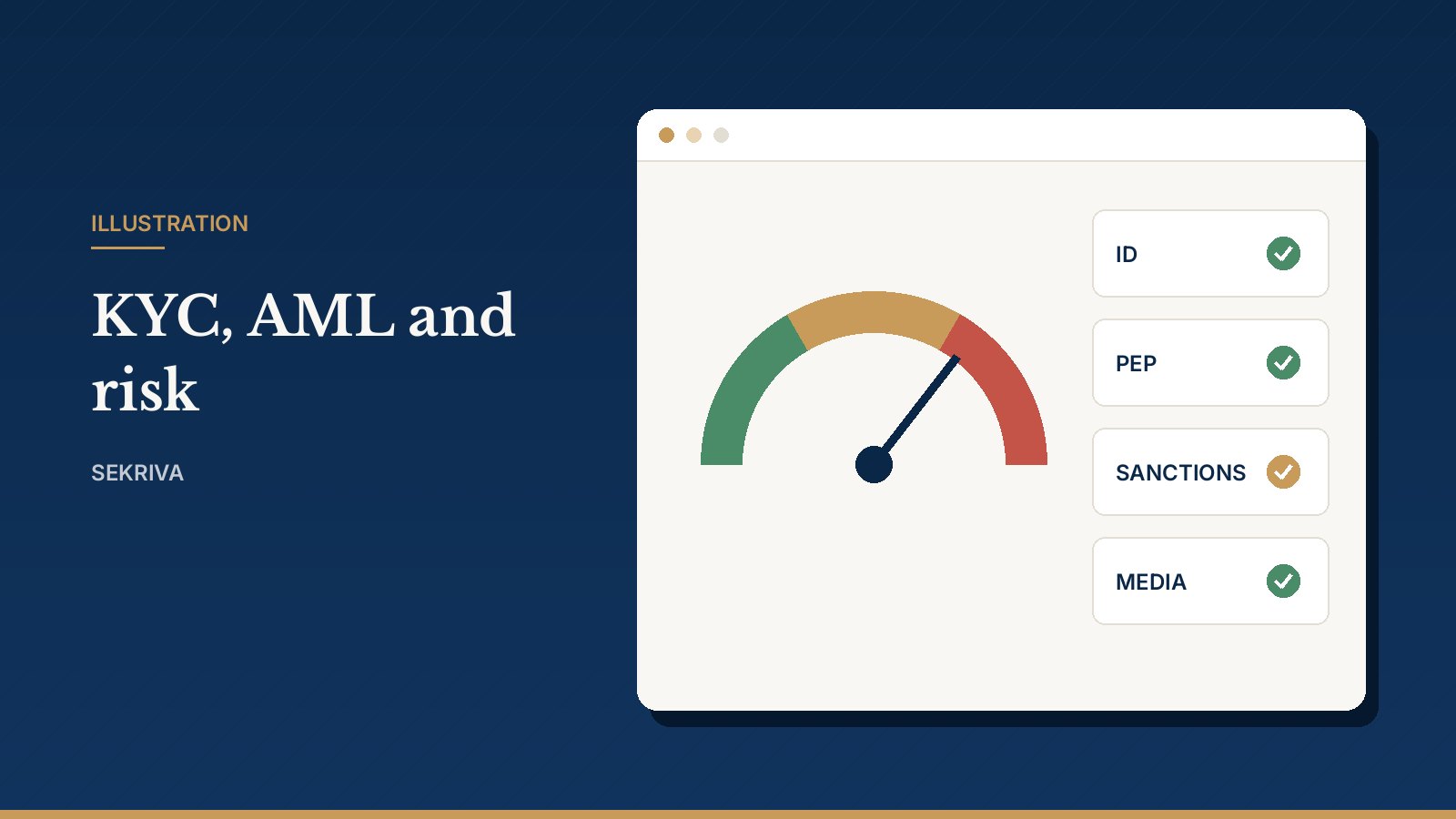
Company secretaries in Malaysia have anti-money laundering obligations, and the paperwork behind customer due diligence grows quickly. Sekriva gives every KYC review a structured case with a risk score and a clear record of who approved it, when and on what basis.
Who can be reviewed
You can open a KYC case for a person, an organisation, a client or a company.
Running a case
- Open a KYC case for the subject.
- Complete the verification checklist. Record each screening result with its source:
- identity checks
- PEP (politically exposed person) screening
- sanctions screening
- adverse media screening
- The risk score updates automatically as you go.
- A compliance officer then approves, rejects, escalates or asks for more information.
Enhanced due diligence
Any one of these triggers enhanced due diligence (EDD):
- a confirmed PEP
- a sanctions hit
- a risk score of 60 or more
Under EDD, the source of funds and the source of wealth must be recorded before the case can be approved.
Periodic review
Approval sets the next review date based on risk:
| Risk | Next review |
|---|---|
| Low | 36 months |
| Medium | 24 months |
| High | 12 months |
A KYC risk report shows the picture across your whole portfolio and exports to PDF or Excel.
Sensitive evidence stays restricted
Evidence files can only be seen by users who are allowed to see sensitive data. Every action on the case is recorded in the audit log.
Sekriva supports your AMLA process. It does not replace your firm’s compliance programme, and screening results are what you record from your chosen sources.